As the curtain begins to fall on 2024, and we prepare to watch 2025 unfold, in the world of politics it is important to reflect, review, and evaluate how far we have come and how far we still need to go. For many, the new year is a chance for new beginnings and self-improvement, yet for far too many others, the new year is merely a changed number as they are forced to continue enduring horrific injustices.
But as we are made of aware of an overwhelming number of injustices, both at home and abroad — how can we effectively help others whilst looking out for ourselves?
I will seek to answer this question through a series of examples from 2024, providing my personal reflections and advice I think all activists need to be mindful of for 2025’s forthcoming fights.
The Palestinian Genocide and Protest
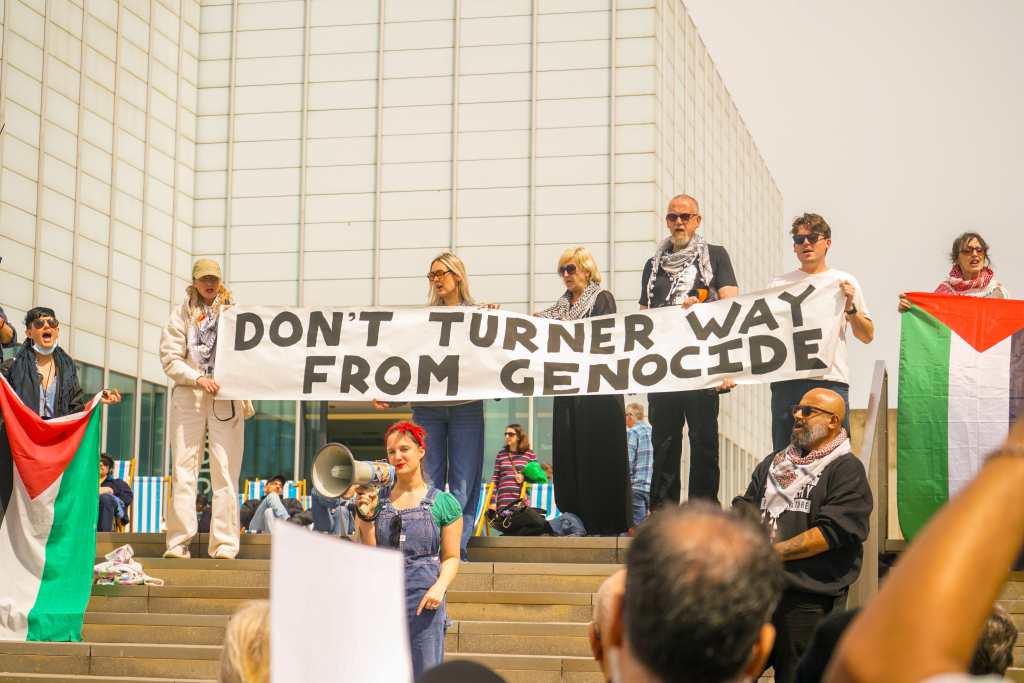
In June 2021, I wrote of the militaristic apartheid and occupation of Palestine in an article titled “Israel Attacks Palestinians Quite Literally on their Doorsteps” in which I concluded the need for international solidarity far beyond a social media trend. At the time, I admit this may have unfortunately been optimistic, given how Palestine was rarely seen again on many algorithms and ‘for you pages’ until returning following the tragedy of 7th October 2023 and the ensuing genocide. But I think we have mostly learnt our lesson, since now in the face of a genocide (as confirmed by Amnesty International, Human Rights Watch, and the International Court of Justice) perpetrated by Israel against the Palestinian people, we have organised, in student encampments, sustained mass protests, boycotts and many other actions undertaken globally. Therefore, demonstrating the necessity of moving beyond social media and its often performative activism in order to challenge injustice.
However, in the Palestinian movement beyond social media, an increasing desperation, in light of more evidence solidifying Israeli genocidal acts and intent, has raised the issue of legitimate protest and the rule of law. Especially relevant when the UK’s Prime Minister, Keir Starmer, who is a former prominent human rights lawyer, is unable to recognise and accept the consensus of international bodies and non-governmental organisations’ expertise. This means calls for the complete suspension of arms sales to and the introduction of sanctions on Israel are falling on deaf ears.
As a result, it may be relevant to consider the justification of necessity in the case of protests escalating beyond traditional peaceful marches. This is given the true horror of the genocidal acts which the UK government appears to be actively complicit and participatory in. However, since the UK provides only a small proportion of Israel’s weapons and many protests have now also focused on enforcing boycotts and encampments or occupations of buildings, many question the legitimacy of escalating tactics. Although it must be seen as a moral imperative that the UK government immediately halts any complicity in breaches of international humanitarian law, regardless of scale – complicity is complicity. Boycotts are also seen as necessary, since it’s very important to recognise that governments are not the only sources of power and funding, and in light of business dependence on favourable public opinion, boycotts can often be extremely effective in forcing change. But in order to maintain the movement’s legitimacy, we all must be well-informed and organise around a specific and purposeful target.
However, importantly, escalating tactics justified by notions of necessity are not isolated to the Palestinian liberation movement, but are quite prominently shared by environmental protestors such as Extinction Rebellion and Just Stop Oil. And whilst these campaigns benefit from widespread public and scientific knowledge and consensus on the seriousness of climate change, meaning ensuring people are all well-informed is not such a great challenge. It could be argued their more drastic actions lack a clear, impactful, and relevant target, regularly turning public opinion against them. Although, such inconvenience is the very nature and definition of protest. And interestingly, in 2023 the European Court of Human Rights held in the case of Laurijsen and Others v. the Netherlands that the arrest of peaceful protestors blockading a road violated their Article 11 rights to freedom of assembly under the European Convention on Human Rights.
Therefore, it is clear that communication is key to effectively convey the potential legal basis for disruption and convincingly explain the basic humanity which motivates their actions to the wider public. This would improve public support and aid perceptions of legitimacy.
But what shines through all of these issues and connects them all is the need to protect the protest. The unwillingness of the new Labour government to reverse laws passed by the previous conservative government, such as the 2023 Public Order Act and the 2022 Police, Crime, Sentencing, and Courts Act (my explanation of the introduced bill in 2021 here) means our right to protest is continually encroached. As made clear by Amnesty International UK – describing them as “deeply authoritarian” and “neither proportionate nor necessary” and in fact they also “place the UK government in breach of its international obligations”.
To me, this represents a call for solidarity to all political movements which use protest as a means of fighting for change, to protect what is such an indisputably fundamental right of all people. So in the year ahead, we will need to recognise there is an underlying injustice greater than any one individual political issue, which requires solidarity in mobilisation and organising efforts between different movements.
Additionally, alongside protest, the pro-Palestine movement demonstrates the power and necessity of legal instruments. Especially in the USA, the frequent dismissal of significant popular support for Palestine (as shown through regular, very well attended protests and encampments) was best epitomised in my view by Vice President Kamala Harris’ steadfast promise to ensure ‘Israel’s right to defend itself’ – extremely troubling from both an international law perspective and her positioning as the more ‘progressive’ presidential candidate. But this position is unfortunately common amongst western leaders, with both the French and German governments having imposed heavy crackdowns on pro-Palestine protests.
Consequently, it is pertinent to realise as we enter next year, that traditional protest as a display of mass public support can not be instantly assumed as effective in impacting change. This suggests the need to mobilise more legalistic approaches to issues, as the UK government has been forced to recognise the arrest warrants issued by the International Criminal Court for Benjamin Netanyahu (Israel’s Prime Minister) and Yoav Gallant (a former Israeli defence minister). And in recent High Court proceedings brought against the government by Al-Haq and the Global Legal Action Network, it was admitted “Israel is not committed to complying with international humanitarian law” by its own assessment. In addition to the fact that the political expediency of “the risk to the UK/US relationship” was a primary consideration for decisions regarding the suspension of arms export licences.
The unique pressure achieved by legal instruments and methods in the context of Palestine reflects how similar approaches may be the most effective tools of change in 2025. This compliments the necessary development and solidarity of protest movements to unite in defence of fundamental rights.
France: the Far Right on the Rise
As brief background to the French political situation, in June, the European Parliament elections in France saw significant gains for the far right, with Marine Le Pen and Jordan Bardella’s National Rally (RN) party receiving 31.4% of the vote. This troubled French President Emmanuel Macron, who said he could not act “as if nothing had happened”, and so sought “clarification” by calling legislative elections. Macron’s reasoning and motivations were questionable and mainly speculative, but his election campaign as the sensible centrist — labelling the economic plans of both left and right “extremes” as irresponsible and unworkable — in the end got him the very opposite of “clarification”. The new broad-left coalition New Popular Front (NFP) won 182 seats, achieving a relative majority, beating Macron’s centrist coalition Ensemble with 168 seats and RN with 143 seats according to Le Monde. This meant Macron was left to negotiate with a more divided national assembly than before, and in doing so he has quite confusingly sought the support of the far right for his fragile governments, giving unnecessary and excessive weight to their policies on key political issues.
But after such a divisive election and accepting Gabriel Attal’s resignation in July, Macron waited until 5th September to make Michel Barnier his Prime Minister, the longest time France has spent without a Prime Minister in modern history. Barnier’s appointment was reported to be a product of Macron’s appeasement negotiations with Marine Le Pen , who described him as “respectful of National Rally voters”. As a widely considered compromise candidate from the Les Républicains party, Barnier promised a continuation of Macron’s policies – upholding the hugely controversial retirement age increase – and appeared to play to the far right on immigration, describing “a feeling that our borders are seives”.
Under pressure from increasingly worried financial markets to reduce the public deficit, when it came to balancing the budget, Barnier announced 60 billion euros worth of tax rises and spending cuts – ~1/3 being tax rises and the rest spending cuts. As put by Eva Sas (a Green Party national assembly member), the “brutal and excessive” spending cuts on welfare, health, pensions, and local government demonstrate conomic austerity is no longer just a british tradition but now also a french novelty. Ultimately unable to gain enough support for the budget through concessions to both sides, Barnier was forced to use Article 49.3 of the French Constitution, meaning the budget was adopted without a vote. However this prompted both NFP and RN to file motions of no-confidence in Barnier’s government, which a majority passed on 4th December, rejecting the budget, ousting his government and putting him in the history books as the first French PM to lose a motion of no-confidence since 1962.
And the replacement government formed by an unwavering centrist and one of Macron’s earliest supporters, François Bayrou, has hubristically promised unity of the divided contry. But many cabinet members from Barnier’s government stay on, and an influential conservative politician (Xavier Bertrand) announced after receiving an offer to serve in the cabinet: “I refuse to take part in a government formed with Marine Le Pen’s approval”. The failure to include any socialist party politicians in the cabinet as hoped, displays that the lesson of Barnier’s premiership has not been learnt, and so how long can a reliance on Marine Le Pen’s tacit support last this time? Also, I forgot to mention, Bayrou still needs to agree a budget, and La France Insoumise (a left-wing party) has already made clear intentions to submit a motion of no-confidence in the new government.
But with half a year of French political turbulance out of the way, what can we learn from this instability? Firstly, as a positive, I think the results achieved by the leftist coalition, the NFP, portrays the necessity of solidarity and unity in overcoming the threat of the far right, as such a victory would quite possibly not have been possible without it. However, from Macron, we can learn that the advertised mature politics and principled, sensible economics of centrists quite easily crumble in the face of political expediency and convenience. Therefore justifying a necessary extent of skepticism of supposed centrists to reveal their true colours, which are considerably right leaning in the case of Macron. This is not only suggested by his policy record of tax cuts, but now solidified by his pandering for the tacit support and approval of Marine Le Pen, resultingly giving increasing power to the far right, and given the need for a new budget – who knows how far ‘compromises’ or ‘concessions’ will go. So, is centrist politics just helping to facilitate the rise of the far right?
But we must also consider and seek to address the reasons so many people are turning to the right of politics for answers, especially in a year of record voter turnout. I think it would be fair to say that the root causes are primarily economic issues which seem to similarly plague the rest of Europe and many other parts of the world. The centre of politics in France and beyond has reinforced the need for strong economic principles, emphasising that there is no easy fix and we are all enduring this economic struggle together. Whilst the right fails to propose realistic economic policy, for example Reform UK’s manifesto promise to cut £50bn of “wasteful” spending on government departments and commissions. Instead prefering to stoke the culture wars and scapegoat people seeking asylum.
The fact of the matter is, the left cannot simply ignore or dismiss the ideas of the right, because this will only serve to deepen and worsen divisions. Therefore, to effectively fight back, the left needs to communicate a sound economic plan based on redistribution and equity, which creates hope for the future, making clear the disastrous long term impacts of austerity’s spending cuts, which the UK is all too familiar with. In doing so, the responsibility should be reframed, looking to those excessively profiting from this economic situation, therefore building vital working class solidarity.
I would also suggest it’s essential to realise that the far right’s modern invocation of a nostalgic sense of ethno-nationalism, as seen throughout history, is incredibly attractive in times of economic hardship and indeed powerful in attempting to justify their racist language and policy proposals – please feel free to read further here. In response, instead of what Keir Starmer is currently doing – attempting to appease calls for a harsher approach to immigration whilst trying to reclaim the union flag – he may need to turn to a progressive form of nationalism which takes pride in our diversity, our empathy and compassion, and our global responsibilities, which ultimately prizes our ability to afford people safety and security, turning the tide against division.
Inspirational Acts of Resistance
In the hope of providing some rare optimism to reassure us that the world isn’t entirely doom and gloom, I’d like to share an incredibly niche but one of my favourite sources of inspiration from this year – minoritised language activism. I think it is an extremely overlooked right of people, but especially of children, to learn and speak their minoritised or indigenous language, and a brilliant example from this year of this right’s promotion is Gaeilge (Irish).
The most prominent piece of activism in my opinion was the brilliant film Kneecap, and of course their equally as good music (although I recognise it may not be to everyone’s taste). For me this was so impactful not only because of the inspiration it provided to so many to start learning Gaeilge, but since it represents a reminder of the many artistic forms of activism, which are often neglected but are still evidently incredibly effective. But even before the film was released, Irish language education has been on the rise, with it overtaking French as the 2nd most popular language choice for A levels in the North this year. And this goes a significant way to show the importance of education in not only the enjoyment of the right to speak a native minoritised language, but for promoting all human rights – creating a society rooted in empathy and inclusion, equipping young people to confront injustice and deconstruct colonial legacies.
In Conclusion
This article has discussed everything from the need for renewed solidarity, a possible new progressive nationalism, to the importance of education. But in the face of so many challenges, it is now more important than ever to make sure we take care of ourselves with time to properly rest and plan, so we act with optimal energy and intent.
Whilst I don’t expect 2025’s forthcoming fights against injustice to be easy, throughout it all we should remind ourselves of the global human family to which we all belong, so in the usual 2-ish word fashion:
Solidarity forever
 Teen Politics
Leave a comment