On 20th June 2025, following what Yvette Cooper called “a long history of unacceptable criminal damage,” the then Home Secretary decided to add the direct action protest group Palestine Action to the list of proscribed (formally banned) terrorist organisations under the Terrorism Act 2000. This decision came into force as law on 5 July 2025, making it an offence to be a member of or invite support for Palestine Action.
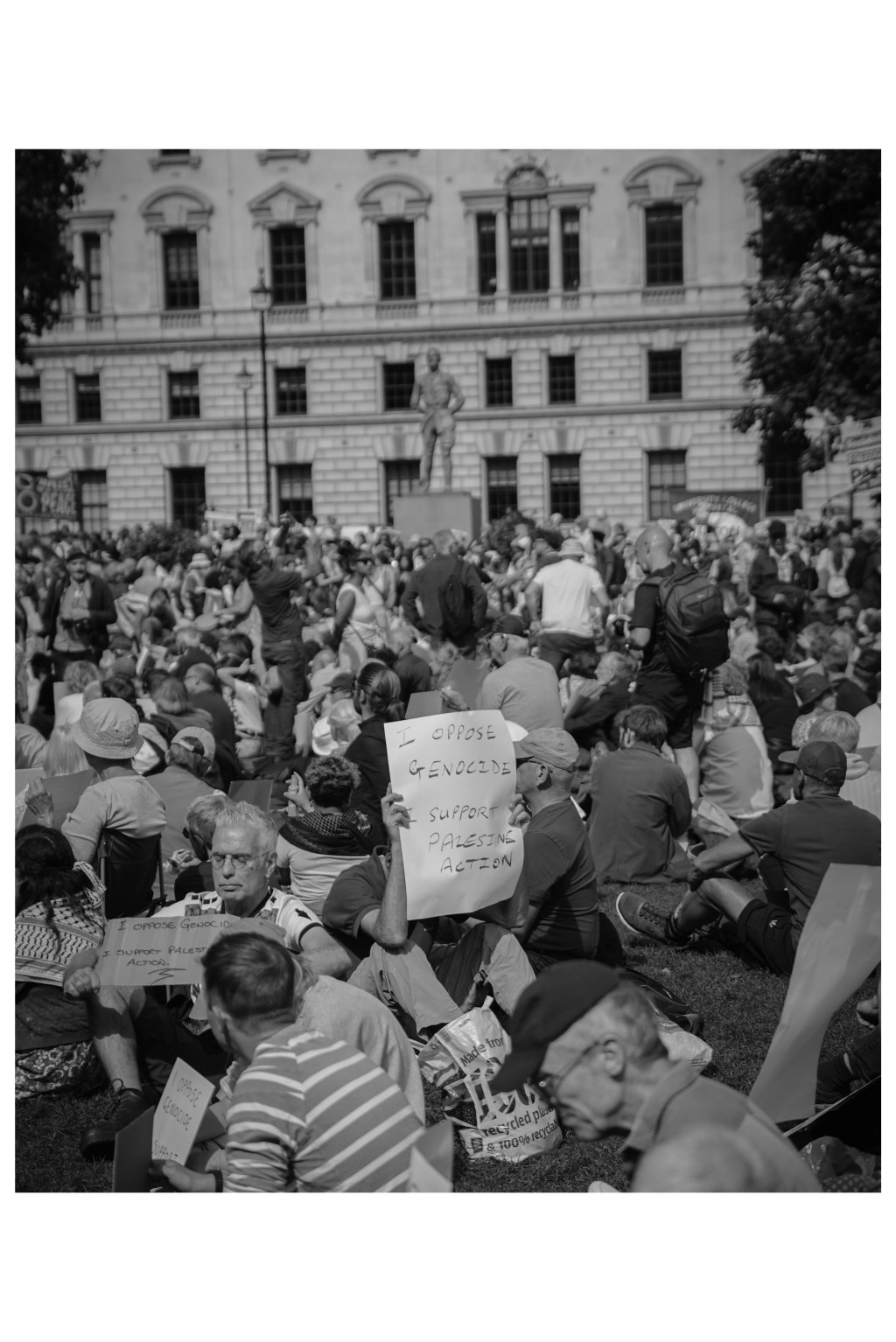
Since then, the police have reportedly spent over £10 million enforcing the ban. This includes arresting more than 2700 people for protesting the ban by holding up signs in support of Palestine Action, with nearly 700 of them having been charged with a terrorism offence and faced preliminary court proceedings. This is despite the leading human rights organisation Amnesty International UK (AIUK) warning the Metropolitan Police in an open letter that such arrests would violate the UK’s international human rights law obligations.
However, even before MPs voted to proscribe Palestine Action, AIUK wrote to parliamentarians, urging them to oppose the proscription. This was grounded in concerns over the UK’s extremely broad legal definition of terrorism, a definition criticised by the UN Human Rights Committee in 2024 because of its negative impacts on human rights. Therefore, unsurprisingly, a co-founder of Palestine Action, Huda Ammori, launched a judicial review of the Home Secretary’s decision. This means the court was asked to examine the decision and consider whether the law was correctly followed.
Permission For Judicial Review
Before the High Court could hear the judicial review, Ammori needed permission to apply for judicial review, which was granted by the Court of Appeal in October 2025. The Home Secretary had argued there was another way of challenging the proscription, that being the right of appeal to the Proscribed Organisations Appeal Commission (POAC), and therefore a judicial review should not take place.
However, the Court of Appeal concluded that the deproscription process made possible by the POAC is intended as a way to challenge an organisation’s continuing proscription due to changed circumstances. But it is not intended to be a means of challenging the initial decision to proscribe and does not remove the consequences of an initial decision to proscribe an organisation, such as criminal convictions. Consequently, the POAC appeal route could not be considered an appropriate remedy, so the judicial review was allowed, particularly given the public importance of the issue with the prospect of a large number of criminal convictions for those protesting the ban.
The Judicial Review
The relevant area of law debated here is Section 1 of the Terrorism Act 2000. This sets out the conditions Palestine Action needs to satisfy for the Home Secretary to consider the organisation “concerned in terrorism”, the required threshold for proscription. This includes action involving “serious damage to property” aiming to advance a “political, religious, racial, or ideological cause”, which, as noted above, is an extremely broad definition criticised by Amnesty International UK and the UN Human Rights Committee.
However, for ministers, having the power to do something does not mean they have to do it. This means there is a difference between deciding whether Palestine Action fits the definition and deciding whether they should be proscribed. So the High Court focused on whether the Home Secretary had lawfully used this discretion.
On 13th February 2026, a 3-judge bench ruled that the Home Secretary’s decision to proscribe Palestine Action was unlawful. But how? And why? In making this decision, the judges considered the 4 grounds raised by Ammori in her challenge:
- The Home Secretary failed to account for relevant considerations
- The Home Secretary failed to give Palestine Action the opportunity to make representations that it should not be proscribed
- The Home Secretary was in breach of her own policy on using her discretion to proscribe organisations
- The decision to proscribe went against the Human Rights Act 1998, in particular violating articles 10 and 11, which protect the freedoms of expression, association, and peaceful assembly, and further amounting to discrimination in breach of article 14.
Grounds 1 and 2
Receiving little over a page of discussion in the 46 page judgement, the first ground was unsuccessful. Whilst the second ground similarly failed, it merited greater discussion. The right invoked here, to be consulted when a government decision stands to impact one’s rights or interests, is a fundamental and long-recognised part of procedural fairness.
This point of fairness was confirmed by the UK Supreme Court in the 2013 case of Bank Mellat v HM Treasury (No.2), which Ammori relied upon. This case concerned Bank Mellat, an Iranian bank accused of providing banking services to companies involved in the Iranian Government’s nuclear proliferation programme. The Supreme Court found it was unlawful for the government to have instructed UK businesses to avoid dealings with Bank Mellat without giving the bank an opportunity to respond to the government’s concerns, given the bank was the target, would have suffered a significant impact, and may have been able to dispute the concerns.
However, the High Court found that the case was not directly relevant here, with several key differences. Principally, whilst both cases touch on security issues, the power exercised in the case of Bank Mellat could arise in a variety of other circumstances. Additionally, it was thought that imposing a duty to consult organisations prior to proscription may be difficult to do, if the organisation had no presence in the UK for example, and it may not be in the public interest to give these organisations information they could respond to.
Yet, similarly to Professor Mark Elliott in his summary of the judgement, I struggle to understand how this reasoning removes a duty to consult, and thus procedural fairness, universally and not just in impossible, impractical, or pointless contexts, particularly given “what fairness requires must depend on the circumstances. The devil is in the detail” (paragraph 56 of the judgement).
Ground 3
Ground 3 focuses on the Home Secretary’s own policy setting out when organisations which meet the threshold for proscription should be proscribed, since when a policy applies, complying with that policy is necessary for the decision’s legality, although not a sufficient condition.
According to the policy, in addition to the threshold under the Terrorism Act 2000 discussed above, “the Home Secretary will take into account other factors” which include, although importantly are not necessarily limited to, the nature and the scale of the organisation’s activities, the threat posed to the UK and British nationals overseas, the extent of the organisation’s presence in the UK, and the need to support other countries in the global fight against terrorism. Whilst it was recognised that the nature and scale of Palestine Action’s activities and the extent of its threat in the UK were pertinent considerations for the Home Secretary, the provided evidence also showed that the additional policing powers granted by the Terrorism Act, which would have “significant disruptive benefits”, potentially formed “the central consideration” in the decision.
As the High Court interpreted, the purpose of the policy is to limit the use of this discretionary power to proscribe and thus any “other factors” should contribute to making this decision, recognising that not all organisations which are ‘concerned in terrorism’ should be proscribed. However, this consideration of the operational consequences and benefits of proscription would apply equally to any other organisation which meets the threshold. Therefore, it was held that this consideration is not a relevant “other factor” because it fails to differentiate between organisations and so is inconsistent with the purpose of the policy.
By the court’s own admission, “this conclusion appears to rest on a very narrow basis” and reading of the policy. Therefore the court’s interpretation of the policy’s purpose is likely to be a significant component of the government’s expected appeal. Additionally, the judgement also admits that, in principle, demonstrating the unusually effective consequences of the extra powers granted by proscription could be considered a particular benefit of proscription for a specific organisation, perhaps given its structure, membership, activities, etc. As such, a government appeal could attempt to point to a particular benefit of proscription’s powers for Palestine Action, bringing the consideration into line with the policy.
Ground 4
Now turning to ground 4, the second successful challenge, which claimed the decision was unlawful because it breached articles 10, 11, and 14 of the European Convention on Human Rights (ECHR), embedded in UK law by the Human Rights Act 1998. Importantly, the freedoms of expression, assembly, and association protected by articles 10 and 11 are qualified rights, meaning they can be restricted, but limitations must be prescribed by law and proportionate.
Before considering Ammori’s claim to ECHR protections, the court examined the Home Secretary’s two preliminary challenges: firstly, violent protest doesn’t fall within the scope of the ECHR, and secondly, article 17 of the ECHR provides that activity intending to destroy the ECHR’s rights and freedoms cannot claim protection by the ECHR. The first fails as what needs to be justified is the restriction on peaceful protest under the Palestine Action banner, not on Palestine Action’s ability to continue damaging property. The second challenge was also rejected because the Home Secretary cannot rely on her own designation, the lawfulness of which being at issue, to establish that a statement like “I support Palestine Action” aims to destroy the rights and values of the ECHR.
Those aside, the court moved to consider the ‘prescribed by law’ element of interference with these rights. Quite simply, given the court earlier found the decision did not follow the Home Secretary’s policy and so was unlawful, it followed that the interference of proscription was not ‘prescribed by law’. Therefore, the decision was found to breach section 6 of the Human Rights Act, which says the government cannot act in a way incompatible with the rights under the ECHR.
As another element of the proportionality test, the court went further to question if proscription represented a “fair balance” between the legitimate objective to protect national security and the impact on ECHR freedoms. The judgement recognised the need to give a degree of leeway to the Home Secretary in light of both political and practical responsibility for public safety, in addition to the fact Palestine Action had carried out action amounting to terrorism under the current definition. Despite this, the court was ultimately persuaded that the decision to proscribe was disproportionate. This is based on the reasoning that Palestine Action’s activities have not reached the level, scale, and persistence beyond currently available criminal punishments to justify the significant consequences of proscription in terms of criminal law measures and interference with ECHR rights.
This proportionality test is naturally complex and subjective, so it unsurprisingly generates tension and controversy around the roles of the courts and those making decisions in government to determine the relative importance of competing values. Consequently, respect for the Home Secretary’s political judgement, which arguably only received superficial attention in this judgement, will likely be a key feature of the anticipated appeal.
It is also important to note that no quashing order was issued at the time of the ruling, which would have immediately lifted the ban. Therefore, the organisation remains proscribed and it is still a criminal offence to express support for it.
Conclusion
Undoubtedly, the High Court’s ruling represents a significant moment for the defence of civil liberties in the UK – but its practical effects remain frustratingly limited. The ban is still in force. In February protesters cried with joy and vindication outside the Royal Courts of Justice on hearing this ruling and the Metropolitan Police’s initial decision to pause arrests. Yet just over a month later, on 28th March, people were once again arrested, although this time on the steps of New Scotland Yard, for holding signs reading “I oppose genocide. I support Palestine Action”. This seemingly means the Met Police is confident enough in the government’s appeal to ignore three senior judges who found the ban to be disproportionate, in breach of the Home Secretary’s own policy, and incompatible with fundamental rights of expression and assembly.
But this case raises a much bigger question: what does the right to protest actually mean in Britain today? The Palestine Action ban did not emerge in a vacuum. The government reached for counterterrorism law with a definition so broad that the counter-terror Prevent strategy flags people simply for showing “a need to redress injustice” – and which the UN warns risks endangering legitimate protest. The Met arrested thousands of people simply for holding cardboard signs. If that is how the state treats protesters, the answer is troubling: our right to protest is far more fragile than most assume.
You can read the High Court’s full judgement here, and Professor Mark Elliott’s detailed and excellent summary of the judgement here.
 Teen Politics
Leave a comment